Logging your mood in Levvi turns a feeling from the day into a history you can review. It is quick enough for days when you do not want to write a long note. Treat the entries as personal observations: one mood entry cannot diagnose a condition or prove why you felt a certain way.
Find the mood entry
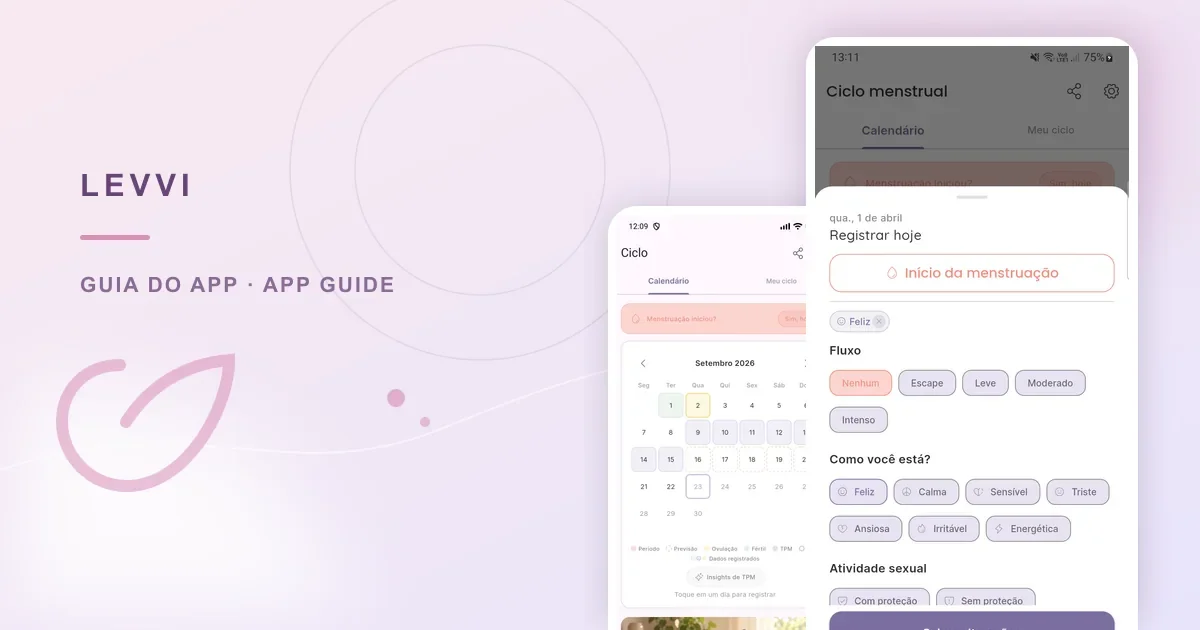
Open Levvi and go to Health. Tap Cycle if you have not set up tracking yet, or Track my cycle when that is your chosen goal. In the cycle calendar, select the date you want to review. In that date’s records, choose the mood that best describes your experience. The entry is saved against the selected date.
Choose from the available options
Levvi provides seven mood options: Happy, Calm, Sensitive, Sad, Anxious, Irritable, and Energetic. Pick the description that comes closest to your experience instead of searching for a perfect label. If your day changed a lot, keep a consistent rule for what you want the entry to represent, such as the part of the day you are reviewing.
- Read the options before tapping so your choice reflects the feeling you mean to track.
- Use a similar decision rule from week to week so the history is easier to compare.
- Add flow, symptoms, or other available cycle records when they provide useful context.

A practical Levvi example
After a difficult night, open the cycle calendar from Health and select today’s date. Choose the mood that fits and add a symptom if one is relevant. A week later, review the previous dates to remember how you were feeling and describe the pattern more clearly in a personal reflection or a conversation with a healthcare professional.
Review or fix an entry
If you opened the wrong date, return to the calendar and select the intended day before recording. When your mood changed during the day, apply the same rule each time so the entries remain comparable. If you cannot find the record, confirm that you are in Health, inside Cycle, and looking at the correct date. The action must be completed in the app; closing before saving may require you to record it again.
What the data means
After choosing an option, tap Save changes to complete the entry. A mood entry is a self-report, not a clinical measurement. Patterns can help you form better questions, but they do not prove that your cycle, sleep, a symptom, or a health condition caused a feeling. Seek professional support if mood changes are severe, persistent, put you at risk, or disrupt daily life.
Build a habit you can maintain
Choose a simple time to review your cycle, such as after brushing your teeth or before ending the day. If you do not remember how you felt, record only when you have a clear impression instead of filling the history out of obligation. The goal is an honest history. Consider important events, rest, and symptoms when interpreting entries, because context helps prevent rushed conclusions.
If you stop tracking for a while, simply resume on the next date that matters to you. A gap does not invalidate the entries you already made, and you do not need to recreate a past feeling from memory. Short, honest entries are more useful than guesses.
Frequently asked questions
Can I log a mood for another date? Yes. Open the cycle calendar, select the date, and record it there. Do I need to write a note? No. The entry uses one of seven mood options; you can add other cycle records when available. Does Levvi detect depression or anxiety? No. It organizes your observations and does not replace a health assessment.