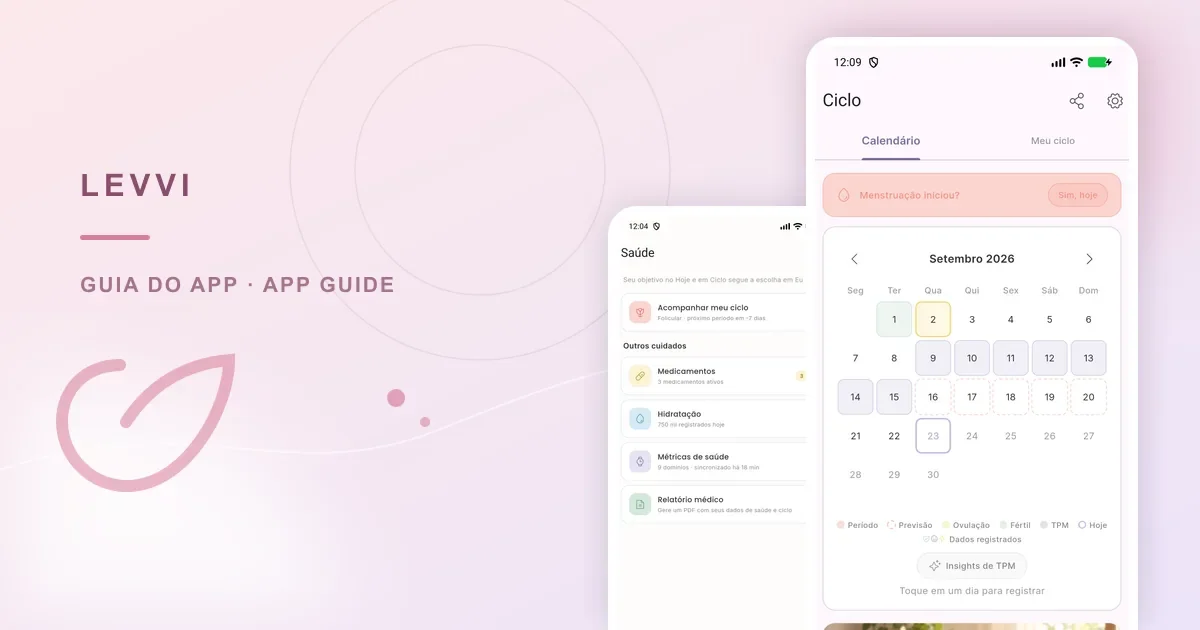
Levvi cycle tracking brings your cycle records together in a calendar. You can enter when bleeding starts, follow flow, and record symptoms across the days. Predictions are estimates based on what you enter. They are useful for planning and observation, but they do not confirm ovulation, diagnose a condition, or work as contraception.
Set up cycle tracking
When you open the feature, follow the goal shown by the app and enter the date of your last period when asked. Only enter what you know. A consistent starting point helps the history, but cycles can vary and a prediction is never a guarantee.
Record each day
In Health, open Cycle before setup or Track my cycle after choosing that goal. Tap the date you want to update. Record what you observed that day, including the available flow choice: none, spotting, light, moderate, or heavy. You can also record symptoms and mood. You do not need to complete every field to use the calendar.
- Use the date when the event happened, even if you enter it later.
- Choose the intensity that best matches what you observed and apply a similar rule across days.
- Review the calendar to understand your own history instead of comparing your body with an average.

Understand the predictions
Levvi may show estimates for upcoming phases, the fertile window, and PMS symptoms based on cycle data. These indications do not confirm that a phase happened, replace a pregnancy test or clinical assessment, or provide contraception. Travel, stress, changes in routine, breastfeeding, medication, and many other factors can change a cycle.
A practical Levvi example
On the first day of bleeding, open the cycle calendar from Health, choose the date, and record the flow you observed. Over the next days, update flow and add cramps or mood when relevant. After a few cycles, review the calendar to bring organized dates and symptoms to an appointment or to plan your routine with better context.
When to review or seek care
If a prediction looks out of place, check that the last-period date and recent records are correct. Correcting an entry can change the estimates. The feature does not replace care: seek medical guidance for severe pain, very heavy or prolonged bleeding, fainting, a possible pregnancy, or any change that concerns you.
Make records useful later
You do not need to track everything at once. Start with the first day of bleeding and the symptoms you actually want to understand. When reviewing your history, compare your own entries across similar periods and write down questions for an appointment. Avoid treating one prediction or one cycle as a rule for your body. When records are incomplete, consider the result partial and keep observing.
If you stop tracking for a while, simply resume on the next date that matters to you. A gap does not invalidate earlier entries, and you do not need to reconstruct an observation you never recorded. Short, honest entries are better than guesses for future review and planning.
Frequently asked questions
Do I need regular cycles? No. The calendar can also record variation, but estimates are less reliable when data is limited or highly variable. Does Levvi confirm ovulation? No. It provides estimates from your records. Can I use the fertile-window prediction to avoid pregnancy? No. Use appropriate contraception guidance and speak with a healthcare professional.