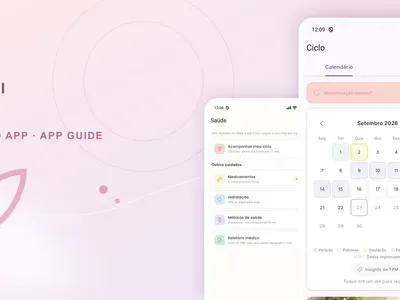

Cycle-synced training has exploded across wellness communities with the promise of unlocking peak performance by working with your hormones rather than against them.[1] The concept is appealing — and partly supported by science. But the full picture is more nuanced than most social media posts suggest. Levvi's cycle tracker lets you log your workouts and energy levels together, so you can discover your personal performance pattern rather than following a generic protocol that may not match your biology.
What the Science Actually Shows
The evidence on cycle-synced training is genuinely mixed.[1] A 2020 meta-analysis of 78 studies found that exercise performance may be slightly reduced during the early follicular phase (days 1-5) compared to other phases — but the effect size was small, approximately 2-3%, and highly variable between individuals. This is a statistically detectable difference at the population level that may not be noticeable in individual training sessions.
A 2021 narrative review confirmed that hormonal fluctuations can influence parameters like strength, endurance, and recovery — but the effects are modest and individual variation is the dominant factor.[2] The same phase that reduces performance for one woman may have no effect on another. Genetic differences, training history, stress levels, sleep quality, and nutritional status all interact with hormonal signals to produce highly individual outcomes. This means cycle phase is a useful context but not a reliable predictor for any specific woman's training capacity on any given day.
So why consider the cycle at all? Because even when objective performance changes by only 2-3%, the subjective experience can vary dramatically.[1] Perceived effort, energy levels, motivation, and physical comfort can differ significantly across phases in ways that affect training enjoyment and consistency. Adapting training to how you feel — rather than forcing the same intensity regardless of phase — supports long-term adherence, which ultimately matters more than any single session's output. Consistency over months produces results that no single peak-phase session can match.
A Practical Phase-by-Phase Guide
Even with mixed scientific evidence on objective performance, adapting training to your energy and comfort levels across the cycle makes it more sustainable and enjoyable.[1] Use this as a flexible starting point — not a rigid protocol. Levvi's cycle tracker helps you overlay your logged workouts with your cycle phases to discover which guidance actually applies to your body over 2-3 months of self-observation.
Menstrual Phase (Days 1-5)
If you experience cramps or fatigue, reduce intensity — but there is no scientific reason to stop exercising entirely.[1] Light to moderate exercise during menstruation can actually reduce symptom severity: studies show that aerobic exercise reduces prostaglandin levels and increases endorphins, both of which alleviate menstrual pain. Good options include yoga, walking, light cycling, and gentle strength work. If you feel well, there is equally no scientific reason to hold back — some women perform their best during menstruation and find cramps to be minimal.
Follicular Phase (Days 6-13)
Rising estrogen is associated with more energy, better mood, and potentially improved neuromuscular coordination.[2] Many women report feeling strongest and most motivated during this phase. It is a favorable time for progressive overload, high-intensity training, and trying new physical challenges. Research suggests estrogen may support collagen synthesis and muscle recovery, though the practical implications for training programming remain debated. Use this phase to push harder if your body signals readiness — but do not force it if you do not feel the energy boost. Individual experience varies substantially.
Ovulatory Phase (Days 14-16)
The estrogen peak at ovulation may support peak performance for some women.[1] Many athletes report their best results during this phase, and research suggests elevated estrogen and a brief testosterone surge around ovulation may optimize strength, power, and coordination. If you are working toward personal records or skill-based training goals, the ovulatory window is worth experimenting with. Note: estrogen also increases ligament laxity around ovulation, which some research associates with slightly higher ACL injury risk — particularly relevant for athletes performing pivoting or high-impact movements.
Luteal Phase (Days 17-28)
Progesterone rises and core body temperature increases by 0.3 to 0.5°C during the luteal phase, which affects heat tolerance and perceived effort.[2] Research shows fat metabolism is slightly more efficient during this phase — potentially beneficial for endurance training. However, the combination of higher temperature, potential fatigue, and pre-menstrual symptoms can make intense training feel harder. This is a good phase for maintaining training volume while reducing intensity, focusing on skill refinement and technique work, and prioritizing recovery quality. Extra hydration is particularly important as core temperature is elevated.
The Most Important Factor: Listen to Your Body
Individual variation is the most relevant factor in cycle-synced training — and no published protocol can override what your own body is telling you.[1] Two women in the same cycle phase can have completely different experiences: one may feel powerful and motivated during the luteal phase; another may feel exhausted. Neither experience is wrong. The research describes population-level averages — your personal pattern may deviate significantly from the average, and that deviation is normal and valid.
Instead of following a rigid protocol, use cycle tracking as a tool for self-knowledge.[2] Log your workouts, energy levels, and perceived effort in Levvi across 2 to 3 cycles. Over time, your personal patterns will emerge — which phases genuinely feel different for you, which types of training feel best in which phases, and whether the research patterns apply to your specific body. This personalized data is far more useful than any generalized cycle-syncing guide.
Practical Tips
- Track how you feel before and after training in each cycle phase for at least 2 months — patterns become clear over multiple cycles, not from a single month of data.
- Do not automatically cancel workouts during menstruation — assess how you actually feel on the day. Light exercise often improves menstrual symptoms rather than worsening them.
- Use the follicular phase to increase loads and challenge yourself; use the luteal phase to consolidate technique and maintain volume without forcing intensity.
- Hydrate more during the luteal phase — elevated core body temperature increases fluid needs and impacts heat tolerance during training.
- Prioritize sleep in all phases — recovery quality determines training adaptation more than any single workout, and sleep disruption during the premenstrual window is common and worth actively managing.
Frequently Asked Questions
Should I stop training during my period?
No. Science does not recommend stopping training during menstruation.[1] If you experience significant discomfort, reducing intensity is sensible — but staying active tends to alleviate symptoms through endorphin release and reduced prostaglandin levels. The decision should be based on how you actually feel on a given day, not a blanket rule. Many elite athletes train and compete through all cycle phases, including menstruation, without measurable performance decrements.
Do I need to redesign my entire program around my cycle?
Not necessarily.[1] The evidence shows that the impact on objective performance is small (approximately 2-3%) and highly individual. Small adjustments to training intensity and volume, informed by how you feel on a given day, are often sufficient. The most important principle is consistency: a well-structured program followed consistently across all cycle phases will produce better results than a phase-optimized program that leads to excessive rest during perceived 'low' phases.
Which phase is best for building muscle?
The follicular and ovulatory phases, when estrogen is elevated, may favor strength gains and hypertrophy.[2] However, recent research shows that consistent resistance training across all cycle phases produces meaningful muscle gains in women, regardless of the current hormonal environment. The concern that the luteal phase is 'bad' for muscle building is not well-supported by current evidence. Total training volume across weeks and months matters more than which phase individual sessions fall in — so do not skip the luteal phase for strength work.