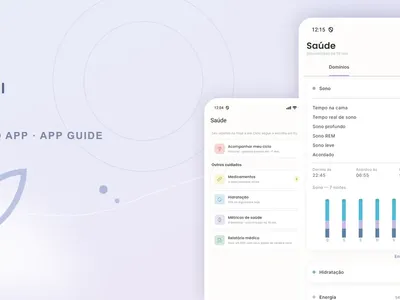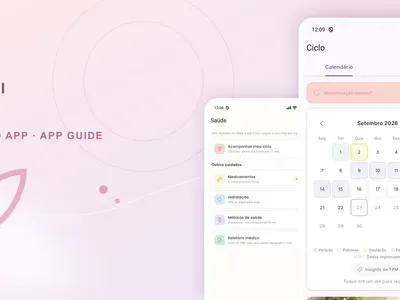
If you notice sleeping better in certain weeks of the month and worse in others, that is not a coincidence.[1] The menstrual cycle exerts a direct, measurable influence on sleep architecture, circadian rhythm, and subjective sleep quality through the actions of estrogen and progesterone on the brain's sleep-regulating systems. Understanding which phases disrupt sleep and why allows you to adapt your routine proactively — and Levvi's cycle tracker makes these phase-specific patterns visible over 2 to 3 months.
How Hormones Regulate Sleep
Two ovarian hormones take center stage in the sleep-cycle relationship: progesterone and estrogen.[1] Progesterone, dominant in the second half of the cycle (luteal phase), has thermogenic properties — it raises core body temperature — and its metabolite allopregnanolone acts on GABA receptors in the brain, producing sedative effects. This is why many women feel drowsier during the mid-luteal phase when progesterone is high. However, the subsequent drop in progesterone before menstruation removes this sedative support, creating the classic late-luteal sleep disruption.
Baker and Driver (2007) demonstrated that these hormonal fluctuations not only alter subjective sleep perception but modify fundamental circadian rhythms.[2] The circadian timing system — the body's internal 24-hour clock — is sensitive to reproductive hormones. Changes in the circadian rhythm of core body temperature across the cycle directly affect sleep onset timing, sleep depth, and the balance between REM and non-REM sleep stages. These are real, measurable architectural changes in sleep, not simply perceptual distortions.
What Happens in Each Cycle Phase
Menstrual Phase
Menstruation marks the lowest point of ovarian hormones — both estrogen and progesterone are at their nadir.[1] Paradoxically, this is when many women report the worst subjective sleep quality. Alzu et al. found that despite low hormonal activity, menstruation is associated with increased sleep fragmentation, more nighttime awakenings, and heightened sensitivity to pain — particularly cramps — that disrupts sleep continuity. The physiological relief that follows is real: many women notice sleep improving significantly within 1 to 2 days of menstruation starting as acute hormonal volatility resolves.
Follicular Phase
After menstruation ends, hormonal levels are still low but stable, and the body enters its best sleep window of the cycle.[2] Baker and Lee (2022) highlight that the follicular phase is characterized by the most consolidated, efficient sleep of the entire cycle — deeper slow-wave sleep, less fragmentation, and better subjective sleep quality. Rising estrogen during this phase supports serotonin production, which promotes sleep quality, and core body temperature shows the lowest baseline of the cycle, facilitating optimal sleep onset and maintenance.
Ovulatory Phase
Ovulation represents a hormonal transition: the peak estrogen surge followed by the initiation of progesterone production creates a rapid hormonal shift.[1] Some women experience transient sleep disturbances around ovulation, particularly in the 24 to 48 hours following the LH surge. The abruptness of the hormonal transition — not any single hormone level — appears to drive this brief disruption. For most women, this ovulatory window is shorter and less impactful than the late luteal disruption.
Luteal Phase
The luteal phase is the most extensively studied in relation to sleep and produces the most marked changes.[3] With progesterone at elevated levels, an increase in sleep spindle activity occurs — a specific brainwave pattern detectable on EEG that reflects active memory consolidation during sleep. Despite this neurologically active sleep, women often report feeling less rested. Research shows that progesterone's thermogenic effect raises core body temperature by 0.3 to 0.5°C, which compresses the window for deep, restorative sleep.
Simultaneously, the elevated core body temperature in the luteal phase reduces the amplitude of the circadian thermal rhythm.[3] This means the physiological signal that normally triggers the transition from wakefulness to sleep — a sharp evening drop in core temperature — is blunted. The body's natural sleep onset cue becomes weaker, making it harder to fall asleep at a consistent time and easier to experience fragmented sleep even when the total hours appear adequate.
Sleep, Emotions, and the Cycle
The relationship between sleep and the menstrual cycle extends beyond physiology — emotions play an important mediating role.[4] Meers et al. (2024) investigated the interaction between premenstrual symptoms and sleep quality and found that women who reported higher levels of emotional symptoms — anxiety, irritability, mood instability — in the late luteal phase also showed significantly worse objective sleep quality measured by actigraphy. The emotional and sleep disruptions are not independent: they amplify each other through the same neurochemical systems.
The most important finding is that poor nights during the late luteal phase amplify emotional reactivity, creating a feedback loop: poor sleep worsens mood, which increases anxiety and hyperarousal, which further disrupts the following night's sleep.[4] Breaking this cycle requires addressing both dimensions simultaneously — sleep hygiene adaptations for the phase and emotional regulation practices that reduce the hyperarousal driving sleep difficulty. Tracking both sleep and mood in Levvi makes the loop visible and allows targeted intervention.
When Sleep Quality Warrants Medical Attention
While mild cycle-related sleep variation is normal and expected, certain patterns warrant clinical evaluation.[2] Li, Lloyd, and Graham (2021) compared sleep quality in women with and without anxiety disorders and found that women with generalized anxiety disorder showed significantly greater sleep deterioration during the luteal phase compared to non-anxious women. If your premenstrual sleep disruption is severe, involves significant daytime impairment, or is accompanied by worsening anxiety or mood, this overlap pattern is clinically meaningful and worth discussing with your provider.
Baker and Lee (2022) also note that women with polycystic ovary syndrome (PCOS) have elevated risk of sleep-disordered breathing.[2] The altered hormonal profile in PCOS — particularly elevated androgens and disrupted progesterone cycling — affects upper airway tone in ways that increase sleep apnea risk independently of weight. Women with PCOS who report non-restorative sleep, daytime fatigue, or snoring should discuss sleep apnea screening with their healthcare provider.
Consider seeking professional evaluation if:
- Insomnia persists for more than one full week each cycle — affecting multiple consecutive cycles.
- You wake repeatedly short of breath or with intense snoring.
- Daytime sleepiness significantly interferes with work or daily activities.
- Anxiety or depressive symptoms intensify alongside sleep deterioration during the luteal phase.
Sleep Tips for Each Phase
Understanding the cycle-sleep relationship allows phase-specific adaptations that work with your biology rather than against it:
- Cool your environment in the luteal phase: since core body temperature is already elevated, keeping your bedroom between 18°C and 20°C (64-68°F) provides the thermal drop your body needs to initiate deep sleep.
- Prioritize comfort during menstruation: heat packs for cramps before bed and a comfortable sleeping position can reduce the pain-driven sleep fragmentation characteristic of the menstrual phase.
- Use the follicular phase to strengthen your routine: this is your best sleep window — use it to reinforce consistent sleep and wake times that anchor your circadian rhythm for the more challenging phases ahead.
- Reduce stimulants in the premenstrual week: limit caffeine after 2 pm and avoid high-intensity screen use before bed during the late luteal phase, when sleep onset is already harder.
- Track your pattern: logging sleep quality alongside cycle phase in Levvi for 2 to 3 months reveals your personal phase-specific sleep signature — which phases are your best and worst, and which interventions actually make a difference.
- Practice emotional sleep hygiene: during the perimenstrual window, when emotional vulnerability is higher, breathing exercises or brief journaling before bed can reduce the hyperarousal that drives sleep onset difficulty.
Frequently Asked Questions
Does hormonal contraception affect sleep in the same way?
Combined hormonal contraceptives suppress ovulation and maintain more stable synthetic hormone levels, which tends to reduce the sleep fluctuations associated with natural hormonal cycling.[1] Many women on the pill report more consistent sleep quality across the month. However, progestin-only contraceptives or formulations with high progestogenic activity may still produce some thermogenic effects. Individual response varies — if you notice significant sleep changes after starting or changing hormonal contraception, tracking the pattern in Levvi provides useful data for discussing adjustments with your provider.
Why does my sleep worsen even before my period arrives?
During the late luteal phase — 3 to 5 days before menstruation — progesterone begins falling rapidly.[3] This drop removes the sedative effect of allopregnanolone while simultaneously increasing emotional reactivity and pain sensitivity. The result is the familiar premenstrual sleep disruption: difficulty falling asleep, increased nighttime awakenings, and a general sense of restless, non-restorative sleep — even before any physical period symptoms begin. This is a predictable, biologically driven window, not a personal sleep failure.
How long to notice cycle-related sleep patterns?
Most researchers recommend tracking at least 2 to 3 complete cycles to identify consistent patterns.[2] Because cycle length, luteal phase duration, and symptom timing vary from cycle to cycle, a single month of data may not be representative. Two to three months of daily sleep quality logging in Levvi — alongside cycle day and phase — reveals whether the disruptions are genuinely cyclical and which specific phases are most challenging for your individual biology.