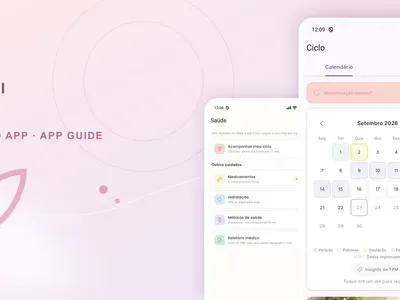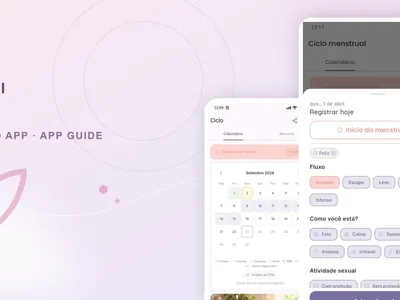
Talking about female sexual desire still carries a heavy weight of taboo — and an even heavier weight of oversimplification. For decades, women's libido was treated as an on/off switch that either worked or didn't.[1] Today, science tells a far more nuanced story. Female desire is shaped by the interaction of biological, psychological, relational, and contextual factors — and it naturally fluctuates across the menstrual cycle. Levvi's cycle tracker helps you observe your own desire patterns over time, turning personal insight into a tool for self-understanding rather than a source of anxiety.
Female Desire: Beyond the On/Off Switch
For decades, models of sexual response were built on the male experience: linear, predictable, with clearly defined stages.[1] The problem is that this model does not accurately describe how most women experience desire. Female desire is less linear, more context-dependent, and far more influenced by emotional state, relationship quality, physical wellbeing, and hormonal phase. Applying a male-derived model to female experience has led generations of women to believe something was wrong with them when, in reality, they were following a different — but equally valid — pattern.
The most widely accepted current framework is the biopsychosocial model of female desire.[1] This model recognizes that desire in women emerges from the interaction between biological factors (hormones, physical health, medications), psychological factors (stress, self-esteem, past experiences), social factors (relationship quality, cultural messages), and contextual cues (safety, privacy, emotional connection). Hormones are real and important contributors — but they are only one layer of a more complex system. No single factor determines desire, and treating it as purely hormonal misses most of the picture.
Another key distinction: female desire can be spontaneous (arising without apparent trigger) or responsive (emerging in response to stimulation or a positive relational context).[1] Both types are entirely normal, and responsive desire is equally valid as spontaneous desire — even though it is rarely discussed. Many women worry that they 'never feel like it out of nowhere' without realizing that responsive desire is the predominant pattern for a significant proportion of women across all ages and relationships. Understanding your own desire type is the first step to working with it rather than against it.
How Hormones Influence Libido
While desire is not reducible to hormones, they exert a real and measurable influence.[2] The key players are testosterone, estrogen, and progesterone — all of which fluctuate across the menstrual cycle and across life stages. Understanding each hormone's role helps contextualize why desire can shift dramatically from one week to the next, from one life phase to the next, and in response to hormonal medications.
Testosterone and Desire
Yes, women produce testosterone — in smaller amounts than men, but with significant effects on desire.[2] A systematic review with meta-analysis found that testosterone therapy in premenopausal and postmenopausal women produced measurable improvements in sexual desire, arousal, and satisfaction. This finding supports the clinical relevance of androgens for female sexual function. Testosterone acts on the brain's reward system and on genital tissue sensitivity, both of which contribute directly to the experience of wanting sex.
This hormonal relationship helps explain why the drop in androgen levels — as occurs at menopause, after certain surgeries (such as oophorectomy), or with some hormonal contraceptive formulations — can significantly impact desire.[2] Women who notice a dramatic change in libido after starting or changing hormonal contraception, or after significant hormonal transitions like postpartum or menopause, may be experiencing exactly this androgen effect. Discussing this with a healthcare provider can open treatment options that are frequently overlooked.
Estrogen and Lubrication
Estrogen plays a more indirect but equally important role in female desire.[2] Rather than directly generating the drive for sex, estrogen maintains the health of vaginal tissue, supports natural lubrication, and preserves the sensitivity and comfort of genital tissue during arousal and intercourse. When estrogen drops — at menopause, in the postpartum period, or during breastfeeding — the result is often vaginal dryness, discomfort during sex, and reduced sensitivity. These physical changes can significantly reduce desire secondarily, not because the drive has changed but because the physical experience of sex has become uncomfortable.
Physical discomfort is one of the most common and underreported factors affecting libido in women.[2] Addressing the physical cause — through lubricants, local estrogen therapies, or other interventions — can restore desire that appeared to have disappeared entirely. This is why a full assessment of low libido always needs to include evaluation of physical comfort and vaginal health, not just psychological factors or hormone levels in isolation.
Libido and the Menstrual Cycle: What Changes
If you notice your desire fluctuating across the month, it is not imaginary.[3] A study published in the Journal of Sex & Marital Therapy analyzed how desire, arousal, and sexual satisfaction vary across menstrual cycle phases. The results showed measurable differences across phases, with desire generally higher in the follicular and ovulatory phases — when estrogen and testosterone are at their peak — and lower during the late luteal phase as progesterone dominates and both estrogen and testosterone decline. Levvi's cycle tracker makes it easy to observe your own monthly desire pattern over 2 to 3 cycles.
A further study published in Hormones and Behavior confirmed that cycle phase influences the hormonal response to sexual stimuli, with higher testosterone reactivity during the ovulatory phase.[3] This aligns with the evolutionary hypothesis that desire peaks around ovulation when fertility is highest. However, this peak is not universally experienced: the hormonal pattern exists, but individual variation in how strongly it translates into felt desire is enormous.
Here is the essential point: not all women follow this pattern.[3] Individual variability is profound. Factors such as chronic stress, sleep quality, relationship satisfaction, self-esteem, and emotional safety can override or completely mask the hormonal signal. A woman under significant work stress may feel low desire throughout her cycle regardless of phase. A woman in a new, deeply connected relationship may feel high desire throughout. Cycle phase is a biological context, not a deterministic script — and Levvi helps you understand which factors actually influence your own desire.
When Low Libido Deserves Attention
Fluctuations in desire are absolutely normal.[4] But when low libido is persistent, causes personal distress, and impacts quality of life or relationships, it may warrant professional evaluation. The key distinction is between a woman who is satisfied with her current level of sexual activity and interest — even if objectively low — and one who is genuinely bothered by the change. Clinical evaluation focuses on the distress, not the frequency.
Hypoactive Sexual Desire Disorder (HSDD) is characterized by a significant and recurrent reduction in sexual desire that causes personal distress.[4] It is the most commonly diagnosed sexual dysfunction in women and is often underdiagnosed because many women do not report sexual concerns to their healthcare providers — either from embarrassment or the belief that nothing can be done. Effective evidence-based treatments exist, including testosterone therapy (in appropriate candidates), psychotherapy, and treatment of underlying hormonal or physical causes.
Diagnosis is clinical and requires that the symptom causes genuine distress — meaning a woman who is content with her sexual life, even with low desire, does not meet diagnostic criteria.[4] This important nuance protects against pathologizing normal variation or culturally expected changes in desire across life stages. The goal of any intervention is to restore wellbeing, not to reach an arbitrary frequency or intensity target.
If something feels wrong, speaking with a gynecologist or sexual health professional is the first step. Effective approaches are available — hormonal, psychological, and behavioral — and the earlier the conversation happens, the more options are available.
What Can Help
Based on available evidence, these strategies can support a more satisfying sexual life by working with both the biological and psychological dimensions of female desire:
- Know your cycle: observing how your desire varies across the month reduces anxiety, normalizes fluctuation, and helps you plan for intimate connection during your naturally higher-desire phases. Track this in Levvi.
- Prioritize sleep and manage stress: sleep deprivation and chronic stress are among the most direct suppressors of libido. Protecting these factors addresses desire at the root level rather than the symptom level.
- Invest in emotional connection: for women with responsive desire, sexual interest often depends directly on feeling emotionally close, safe, and appreciated. Quality of connection matters more than spontaneous arousal.
- Practice regular physical activity: exercise improves circulation, mood, body image, and energy levels — all of which are documented contributors to libido and sexual satisfaction.
- Seek professional support when needed: when low libido causes distress, a qualified healthcare provider can identify whether hormonal, physical, psychological, or relational factors are driving the change — and offer targeted help.
Frequently Asked Questions
Is it normal to feel more desire at certain cycle phases?
Yes. Research shows that many women experience increased desire during the ovulatory phase, when estrogen and testosterone levels are highest.[3] However, this is an average pattern and not universal — many women do not experience a clear ovulatory peak in desire. If you notice consistent patterns in your own cycle, tracking them in Levvi over several months will reveal whether your personal rhythm aligns with the research average or follows its own unique pattern.
Can hormonal contraception reduce libido?
It can, in some women.[2] Hormonal contraceptives suppress ovulation and can reduce free testosterone levels, which in some women is directly associated with reduced sexual desire. The effect is individual and not universal — many women experience no change in libido on hormonal contraception. If you notice a significant change after starting or changing a hormonal contraceptive, discussing this with your provider is worthwhile: changing formulation or method often resolves the issue.
When should I seek professional help for low libido?
When the absence of desire is persistent — not just occasional — and causes personal discomfort or affects your relationships or quality of life.[4] A gynecologist or sexual health professional can rule out hormonal causes, evaluate physical factors, and discuss psychological or relational contributors. Remember: Levvi can help you track libido patterns alongside cycle data to bring concrete, organized information to your consultation rather than relying on memory alone.