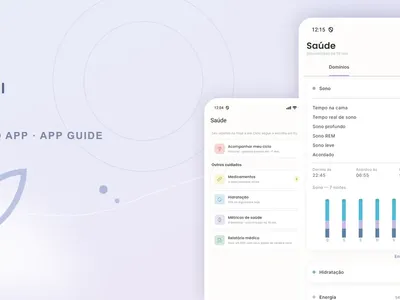

Women are 40% more likely to develop insomnia than men — and science confirms this gap is biological, not imaginary.[1] Female hormonal fluctuations tied to the menstrual cycle, pregnancy, and menopause directly disrupt sleep in ways that rarely occur in men. If you lie awake for hours at certain points in your cycle, or wake up exhausted despite a full night in bed, your hormones may be the missing piece. Levvi helps you track these patterns so you can recognize the connection between your cycle and your sleep quality over time.
This difference runs deeper than lifestyle. It is rooted in how fluctuating estrogen and progesterone interact with the brain systems that regulate sleep-wake cycles, body temperature, and mood. Strategies that ignore this hormonal dimension — treating all insomnia the same way — often fail women entirely. Understanding your biology is the first step toward more restorative rest and building a sleep routine that actually fits your body.
What Science Says About Insomnia and Gender
Epidemiological research consistently shows that insomnia is significantly more prevalent in women. A review of population-based studies confirmed that women have approximately 40% higher odds of developing insomnia compared to men,[1] with the gender gap emerging precisely at puberty — when hormonal cycles begin — and widening further during perimenopause. This pattern strongly suggests a biological rather than purely social explanation. The gap persists across cultures and age groups, pointing to hormonal mechanisms as a central driver of sleep differences between women and men throughout their reproductive years.
Interestingly, objective sleep measurements in laboratory settings tell a more nuanced story. When assessed by polysomnography (EEG), women's sleep architecture tends to show more slow-wave deep sleep than men's — suggesting biological sleep quality may actually be preserved.[1] Yet women consistently report worse subjective sleep quality. Researchers believe this paradox stems from hormonal-driven body temperature shifts, heightened pain sensitivity in certain cycle phases, and nervous system hyperarousal — all of which make sleep feel unsatisfying even when brainwave data looks structurally intact.
How Hormones Affect Sleep Quality
Sex hormones — estrogen and progesterone — act directly on the brain regions responsible for sleep regulation, including the hypothalamus and the areas that control circadian rhythm and body temperature.[2] A comprehensive review in Frontiers in Sleep analyzed how these hormones influence sleep architecture across the entire female lifespan: from the first menstrual cycles through pregnancy, postpartum recovery, and the menopausal transition. Estrogen generally supports sleep continuity, while progesterone has sedative properties — but both create vulnerabilities when their levels shift rapidly or drop below threshold. This hormonal complexity means female insomnia cannot be treated with a single universal approach.
Menstrual Cycle
During the luteal phase — the second half of the cycle after ovulation — progesterone rises and then drops sharply in the days just before menstruation.[2] This abrupt hormonal fall disrupts sleep architecture, increasing nighttime awakenings and reducing the proportion of restorative deep sleep. Many women notice their sleep deteriorating in the 3 to 5 days before their period, often alongside mood changes and physical discomfort. Recognizing this as a predictable monthly pattern — rather than random bad nights — is powerful: you can anticipate these windows and adapt your sleep routine proactively in Levvi.
Pregnancy
Pregnancy brings significant hormonal shifts, physical discomfort, and increased urinary frequency — all of which contribute to progressive sleep disruption across all three trimesters.[2] Sleep quality typically declines throughout pregnancy, with the third trimester showing the most severe fragmentation due to positional discomfort, leg cramps, heartburn, and fetal movement. Hormonal changes further alter sleep architecture by reducing deep sleep stages and increasing lighter, more fragmented sleep phases. These disruptions are normal physiological responses to pregnancy, but their cumulative effects on energy, mood, and immune function are real and significant.
Menopause and Post-Menopause
The progressive decline in estrogen during perimenopause is strongly associated with hot flashes, night sweats, and sleep-disrupting awakenings that can occur multiple times per night.[2] Studies show that up to 60% of perimenopausal women report significant sleep disturbances, making this life stage one of the highest-risk periods for chronic insomnia in women. Even after menopause, lower estrogen levels continue to affect sleep architecture and thermoregulation. This is a distinct biological transition that requires targeted sleep strategies — not simply being told to 'sleep better' or accept worse rest as an inevitable consequence of aging.
The Impact of Insomnia on Women's Health
Chronic insomnia is not simply a matter of daytime tiredness. For women, sleep deprivation is associated with a significantly elevated risk of several serious health conditions,[3] and research shows that the physiological consequences of sleep loss are more pronounced in women than in men. Quality sleep is one of the highest-leverage health interventions available — its effects extend across mood, metabolism, immunity, and cardiovascular health simultaneously.
- Mood disorders including depression and anxiety: women with insomnia have twice the risk of developing depression compared to those who sleep well.
- Cardiovascular disease: sleep deprivation affects the female cardiovascular system more severely, increasing inflammation markers and blood pressure dysregulation.
- Metabolic changes: chronic sleep loss increases insulin resistance and promotes abdominal fat accumulation, independent of caloric intake.
- Cognitive impairment: poor sleep consistently impairs memory consolidation, sustained attention, and decision-making — effects that compound with repeated nights of inadequate rest.
These findings reinforce that addressing sleep is not optional. For women, resolving insomnia is one of the most impactful health interventions available — with benefits that reach far beyond simply feeling less tired in the morning and into long-term protection of metabolic, cardiovascular, and mental health.
What This Means in Practice
If you notice your sleep worsening at specific points in the month, there is likely a direct connection to your menstrual cycle. Tracking your sleep quality alongside your cycle dates in Levvi helps identify these predictable vulnerability windows and plan ahead. Over time, you build a concrete data record — which cycle phases correlate with poor sleep, how consistent the pattern is, and whether lifestyle adjustments are actually making a difference. This is far more actionable than relying on memory alone during a medical consultation.
Cognitive-behavioral therapy for insomnia (CBT-I) is considered the first-line treatment by most clinical guidelines.[3] Unlike sleep medication, CBT-I addresses the underlying thought patterns and behaviors that perpetuate insomnia, with effects that last long after the intervention ends. A typical course involves 6 to 8 sessions focused on sleep restriction therapy, stimulus control, and cognitive restructuring. Research consistently shows CBT-I is more effective than medication over the long term for most people with chronic insomnia — including women whose insomnia has a hormonal component.
Adapting your sleep routine to your cycle phases makes a measurable difference for many women. During the late luteal phase — when sleep is most vulnerable — consider moving your bedtime 30 minutes earlier, reducing caffeine after noon, and adding a warm bath before bed to help your core temperature drop more naturally. Small, phase-specific adjustments often outperform a rigid one-size-fits-all sleep schedule.
How Levvi Can Help
Understanding your personal sleep patterns is the foundation of improving them. Levvi connects sleep tracking with cycle tracking in a single app, making the hormonal-sleep relationship visible over weeks and months. Most period trackers and sleep apps operate independently; Levvi puts both in context together, which is where the most actionable insights live for women managing cycle-related sleep disruptions.
- Sleep monitoring: log how you slept each night — quality, duration, and how rested you felt on waking. Patterns emerge over weeks that are invisible night by night.
- Cycle tracking: overlaying your menstrual cycle data with your sleep logs in Levvi reveals the phase-specific dips and improvements that are unique to your hormonal biology.
This combination of data allows you to have far more productive medical consultations. Instead of describing vague sleep problems, you arrive with a clear record — which cycle phases correlate with poor sleep, how consistent the pattern is, and what has changed. Concrete, organized data leads to better clinical decisions and more personalized care.
Evidence-Based Tips for Better Sleep
Sleep hygiene is the foundation of any strategy to improve rest quality. These recommendations are backed by scientific evidence and adapted for the hormonal realities of the female sleep cycle:
- Keep regular sleep times: going to bed and waking at the same time every day — including weekends — is the single most powerful behavior for stabilizing your circadian rhythm.
- Create a pre-sleep ritual: reserve 30 to 60 minutes before bed for calming activities. Reading, light stretching, or a warm bath signal your nervous system that it is time to wind down.
- Control room temperature: your body needs to cool slightly to initiate deep sleep. Keeping your bedroom between 16°C and 19°C (60–67°F) supports this natural temperature drop.
- Limit blue light exposure: screens suppress melatonin production. Dimming devices 90 minutes before bed makes a measurable difference in sleep onset time.
- Adapt your routine to your cycle: during the pre-menstrual phase, consider going to bed 30 minutes earlier and reducing caffeine after noon to compensate for the natural sleep disruption of the late luteal phase.
- Get up if you cannot sleep: if still awake after 20 minutes, get up and do something calm until sleepy. This preserves the brain's association between bed and sleep — a core CBT-I principle.
Frequently Asked Questions
Why does my insomnia worsen before my period?
During the late luteal phase, progesterone levels drop sharply just before menstruation begins.[2] This hormonal shift disrupts sleep architecture, increasing nighttime awakenings and reducing deep sleep. Physical symptoms — cramps, bloating, breast tenderness — can further fragment sleep during this window. Tracking your cycle in Levvi lets you anticipate these nights and adjust your routine proactively, turning a recurring pattern into something you can plan around rather than be surprised by each month.
Does insomnia affect fertility?
Chronic sleep deprivation can disrupt the hormonal signals that regulate ovulation.[2] Studies have found that insufficient sleep is associated with irregular menstrual cycles and reduced levels of reproductive hormones including LH and FSH. While occasional poor nights are unlikely to affect fertility significantly, persistent insomnia during the years of trying to conceive is worth discussing with a healthcare provider. Addressing sleep is part of a complete approach to reproductive health, not a secondary concern.
Is it normal to feel sleepier during the luteal phase?
Yes. Many women feel greater need for sleep during the luteal phase — the second half of the cycle after ovulation.[2] Rising progesterone has sedative effects that increase daytime drowsiness, while nighttime sleep quality can paradoxically decline due to hormonal volatility and body temperature dysregulation. If you need 8 to 9 hours during this phase but still feel unrested, the issue is likely sleep fragmentation rather than insufficient total sleep time. Tracking this in Levvi helps distinguish the pattern clearly over multiple cycles.