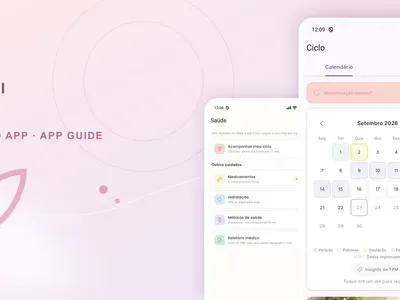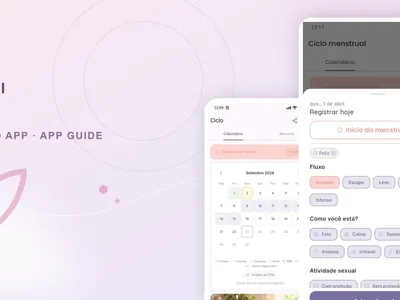

Have you noticed that anxiety seems to appear out of nowhere during certain weeks of the month — that tightening in the chest, the racing thoughts, the disproportionate worry?[1] This is not imaginary and it is not weakness. Research confirms that hormonal fluctuations across the menstrual cycle directly modulate the neurotransmitter systems involved in anxiety. Understanding this connection transforms random bad weeks into predictable, manageable patterns — and Levvi's cycle and mood tracker makes those patterns visible over time.
The relationship between the menstrual cycle and mental health is an expanding field of research.[2] Recent studies show that hormonal fluctuations across the cycle can exacerbate existing anxiety disorders, trigger new anxiety symptoms in vulnerable women, and create predictable windows of heightened emotional reactivity. Cycle-aware anxiety management — anticipating these windows rather than reacting to them — is one of the most practical and underused tools in women's mental health.
How Hormones Influence Anxiety
The central nervous system is profoundly sensitive to reproductive hormones.[1] Two hormones deserve particular attention when discussing anxiety: estrogen and progesterone. Both act as neuroactive steroids — they cross the blood-brain barrier and directly influence the same neurotransmitter systems targeted by anxiolytic medications. This is not a metaphorical relationship: these hormones are neurochemically active compounds that alter brain function in measurable ways.
Estrogen acts as a positive modulator of serotonin — the neurotransmitter most associated with emotional stability and wellbeing.[1] When estrogen rises during the follicular phase, serotonin availability increases, mood stabilizes, and anxiety threshold rises. When estrogen drops sharply in the late luteal phase, serotonin levels fall correspondingly, reducing the brain's natural buffer against anxious reactivity. This is one of the most direct hormonal-to-psychological pathways documented in women's mental health research.
Progesterone, in turn, is converted to allopregnanolone — a neurosteroid that potentiates the action of GABA, the brain's primary inhibitory neurotransmitter.[1] GABA is the same system targeted by benzodiazepine anxiolytics. During the mid-luteal phase when progesterone is high, allopregnanolone supports calm and reduces anxiety. But in women with PMDD or heightened hormonal sensitivity, progesterone fluctuations produce paradoxical anxiety rather than calm — a response that is neurobiological, not psychological.
In short: when both estrogen and progesterone drop in the premenstrual phase, both serotonin and GABA function are compromised — creating a biological window of heightened anxiety vulnerability.[1] For women who already carry an anxiety disorder, this window can feel like a complete loss of the emotional regulation they normally have. Tracking this pattern in Levvi over 2 to 3 cycles builds the data needed to anticipate and prepare for these windows rather than being caught off guard.
Premenstrual Anxiety: PMS, PMDD, or Something Else?
Anxiety that appears before menstruation is frequently attributed to PMS — but the clinical reality is more nuanced.[2] There are at least 3 distinct conditions that can cause premenstrual anxiety, each requiring a different approach. Distinguishing between them is essential because treating the wrong condition means missing the real driver of suffering.
PMS (premenstrual syndrome): involves mild to moderate physical and emotional symptoms in the luteal phase that do not significantly impair daily functioning.[2] Affecting up to 75% of women in some form, PMS is the most common presentation. While distressing, PMS symptoms typically resolve within 1 to 2 days of menstruation starting and do not rise to the level of clinical disorder. Lifestyle modifications — sleep, exercise, reduced caffeine — are the first-line approach.
PMDD (premenstrual dysphoric disorder): a severe condition affecting approximately 2 to 5% of women, characterized by intense anxiety, irritability, mood swings, or depressive symptoms in the late luteal phase that significantly impair relationships, work, and daily functioning.[2] PMDD is classified as a depressive disorder in DSM-5 and requires medical evaluation. Evidence-based treatments include SSRIs (used continuously or luteal-phase only), hormonal suppression, and psychotherapy.
Premenstrual exacerbation: this is a frequently overlooked clinical entity — the worsening of a pre-existing psychiatric disorder (such as generalized anxiety, panic disorder, or depression) during the luteal phase.[2] Up to 64% of women with existing anxiety disorders report significant premenstrual worsening of their symptoms. The crucial difference: symptoms are present throughout the month but peak premenstrually, whereas PMDD symptoms are essentially absent during the follicular phase.
Distinguishing between these conditions requires prospective symptom tracking for at least 2 consecutive cycles.[2] Using Levvi to log mood and anxiety levels daily — alongside cycle phase — provides exactly this prospective record. It is the most important single tool for clinical differentiation and helps your healthcare provider determine the right treatment category for your specific presentation.
The Anxiety-Cycle Map: What Happens in Each Phase
Research on the menstrual cycle's impact on anxiety disorders reveals a consistent pattern across phases:[1] each phase creates a different neurochemical environment with predictable implications for emotional regulation. Understanding this map allows cycle-aware anxiety management — adjusting demands, scheduling support, and deploying coping strategies in the right windows rather than applying the same approach regardless of phase.
Menstrual phase (days 1-5): hormones are at their lowest levels.[1] Paradoxically, many women report emotional relief once menstruation begins — as if a pressure valve has released. The drop in progesterone removes the hormonal volatility of the late luteal phase, and while energy may be low, the anxiety often recedes. This phase is often a window for gentle self-reflection and recovery rather than high-demand cognitive work.
Follicular phase (days 6-12): estrogen rises gradually and this is typically the period of greatest emotional stability and lowest anxiety.[1] Serotonin availability increases, cognitive flexibility improves, and stress resilience is at its highest point in the cycle. This is the optimal window for tackling challenging tasks, difficult conversations, and new challenges that require sustained emotional regulation.
Ovulatory phase (days 13-15): the estrogen peak can bring a sense of confidence and wellbeing.[1] However, some women are sensitive to the rapid hormonal shift that accompanies ovulation — the sudden estrogen peak can paradoxically trigger transient anxiety in those with hormonal sensitivity. If you notice brief anxiety spikes around ovulation, this mechanism is worth tracking in Levvi to confirm the pattern.
Luteal phase (days 16-28): progesterone rises and then falls while estrogen also drops in the second half.[1] The last 5 to 7 days before menstruation — when both hormones are declining — represent the highest-risk window for anxiety exacerbation. For women with PMDD or premenstrual exacerbation of existing anxiety, this window can feel like a neurochemical storm. Anticipating this window using Levvi's cycle tracker allows you to reduce external demands, increase support resources, and activate coping strategies before symptoms peak.
This mapping is particularly valuable because it enables anticipatory management rather than reactive crisis response.[2] Instead of being surprised by anxious episodes, you can identify them in advance, communicate your needs to those around you, and deploy evidence-based coping tools during the specific days when they are most needed.
When to Seek Professional Support
Not all premenstrual anxiety requires medical intervention. However, these signs indicate it is time to speak with a healthcare provider:
- Anxiety significantly interferes with work, studying, or relationships during the luteal phase.
- You avoid commitments or activities in anticipation of premenstrual symptoms — planning your life around your worst days.
- Symptoms include panic attacks, persistent insomnia, or intrusive thoughts.
- The pattern repeats consistently for at least 2 to 3 consecutive cycles.
- Emotional symptoms are accompanied by hopelessness, intense rage, or severe concentration difficulties.
For a PMDD diagnosis, prospective symptom recording for at least 2 consecutive cycles is required — this distinguishes the condition from a retrospective diagnosis based on memory alone.[2] Daily logging in Levvi provides exactly this prospective record and significantly accelerates the diagnostic process by giving your provider objective data rather than subjective recall.
Evidence-Based Strategies
While individual responses vary, the scientific literature identifies several strategies with evidence of efficacy for managing hormonal anxiety:[1] These work best when deployed as a consistent system rather than emergency interventions — particularly when you know a vulnerable window is approaching.
- Track symptoms daily in Levvi: recording mood, anxiety levels, and cycle phase for at least 2 months allows identification of your personal pattern and provides clinical-quality data for your healthcare provider.
- Prioritize sleep during the luteal phase: sleep deprivation amplifies emotional reactivity. Consistent bedtimes and wake times during the premenstrual window are one of the most impactful interventions available.
- Practice regular aerobic exercise: moderate physical activity (30 minutes, 3 to 5 times per week) increases serotonin and endorphin production — directly countering the neurochemical drop of the late luteal phase.
- Reduce caffeine and alcohol premenstrually: both intensify anxiety when GABA is already compromised. Reducing these inputs during the late luteal phase removes a significant amplifier of baseline anxiety.
- Use breathing and mindfulness techniques: diaphragmatic breathing activates the parasympathetic nervous system and measurably reduces cortisol within minutes — a reliable acute intervention for premenstrual anxiety spikes.
- Plan your schedule with your cycle in mind: when possible, schedule high-pressure tasks and important decisions for the follicular phase. Reserve the late luteal phase for lower-stakes, more routine work.
Frequently Asked Questions
Is hormonal anxiety 'just' PMS?
Not necessarily.[2] PMS is one possibility, but cyclical anxiety can also indicate premenstrual exacerbation of an existing anxiety disorder — a very different clinical entity requiring different treatment. It may also indicate PMDD, which is classified as a depressive disorder and responds to specific pharmacological interventions. If your anxiety is significantly impairing your functioning during the luteal phase, a clinical evaluation is worth pursuing rather than managing it as 'just PMS.'
Can hormonal contraception help with premenstrual anxiety?
It depends.[1] Combined hormonal contraceptives stabilize hormonal fluctuations and can reduce symptoms in some women — particularly those whose anxiety is directly driven by the estrogen and progesterone drops of the natural cycle. However, others may experience worsening anxiety on hormonal contraception, particularly with progestin-only formulations or those with low estrogen doses. The individual response is highly variable. If you decide to try this approach, tracking your anxiety levels in Levvi before and after gives you objective data to evaluate whether it is actually helping.
How long does it take to identify a hormonal anxiety pattern?
Specialists recommend tracking symptoms for at least 2 to 3 complete menstrual cycles.[2] This period distinguishes real patterns from isolated variations. A single cycle may be influenced by external stressors that coincidentally aligned with the luteal phase. Two or three cycles of consistent daily tracking in Levvi — logging mood, anxiety intensity, and cycle day — provides the minimum dataset needed to identify whether your anxiety has a reliable cyclical component or other primary drivers.