
What is the fertile window?
The chance of pregnancy is concentrated in the days before ovulation and on ovulation day itself. In the prospective study by Wilcox, Weinberg, and Baird, the fertile window was estimated at about six days: the five days before ovulation and ovulation day. The result depends on the relationship between intercourse and ovulation, not on a fixed rule such as “day 14” for everyone.
Sperm can remain viable for several days when cervical mucus is favorable. The egg, in contrast, remains viable for a much shorter period after ovulation. That is why intercourse before ovulation is an important part of trying to conceive.
How often should you have sex to get pregnant?
The American Society for Reproductive Medicine recommends intercourse every 1 or 2 days during the fertile window. Intercourse two or three times a week can also provide similar results for many couples. The frequency can be adapted to the couple’s preferences, routine, and comfort.
Studies that estimate probability by cycle day help explain why timing matters, but they are not individual calculators. Ovulation can vary between cycles, and a percentage observed in research cannot predict one person’s chance in one particular cycle.
Do you need to save sperm for the fertile window?
In general, a long break is not necessary to “save” sperm. Abstinence changes semen volume, concentration, motility, and other parameters in ways that depend on the context. The evidence does not support one rigid schedule for every couple. If a semen analysis or fertility clinic has given specific instructions, follow that team’s guidance.
There is also no need to turn trying to conceive into an inflexible timetable. The goal is to cover the fertile window regularly without letting calendar pressure increase anxiety or interfere with sex.
How to identify the fertile window more carefully
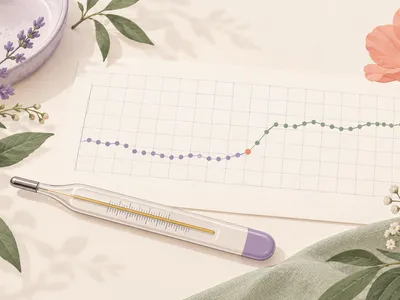
Average cycle length can help estimate the window, but it does not confirm when ovulation happened. Cervical mucus, urinary LH tests, and basal body temperature can add information, each with its own limitations. Apps also make estimates: use predictions as a way to observe your cycle, not as proof that ovulation occurred.
For example, you can record the first day of your period and observations such as cervical mucus in Levvi, compare them with the estimated fertile window, and agree on a comfortable routine with your partner. If cycle length changes, look at your records instead of relying on a fixed “day 14.” The app prediction does not confirm ovulation on its own or replace medical care.
A simple plan for the couple
- Record the first day of your period and observe how your cycles vary.
- When the fertile window is likely, consider intercourse every 1 or 2 days if that feels comfortable for both partners.
- If you prefer a less scheduled routine, keep intercourse regular two or three times a week.
- Use cervical mucus, an LH test, or basal body temperature as complementary signs rather than treating one sign as confirmation.
- Seek advice if you have significant pain, very irregular cycles, or difficulty conceiving.
When to speak with a health professional
Evaluation is generally recommended after 12 months of regular attempts when the person who ovulates is under 35, or after 6 months between ages 35 and 40. Over age 40, speak with a specialist from the start of trying. Seek care sooner if there are very irregular cycles, no periods, a history of pelvic surgery, endometriosis, testicular disease, or another health concern.
Frequency and timing matter, but they do not explain every case. Evaluating both partners can identify treatable factors and avoid placing responsibility on only one person.