
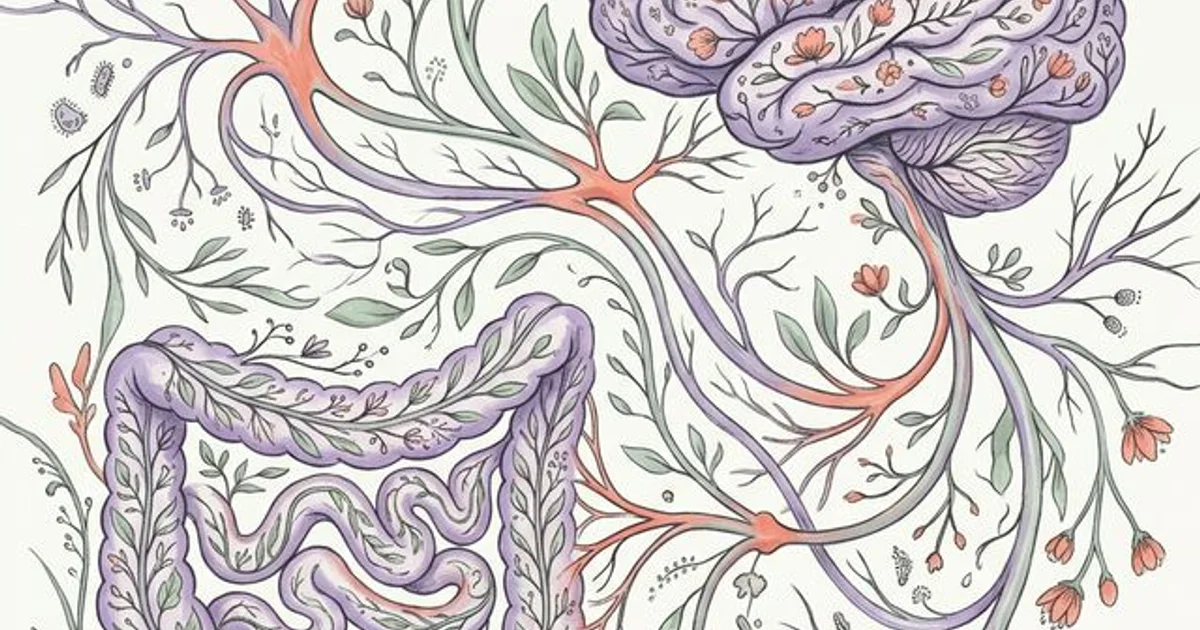
Have you ever noticed that on days when your gut feels off, your mood seems worse too? That's not coincidence. Science has discovered that your gut and brain are in constant conversation through a network called the gut-brain axis. This communication involves neurotransmitters, bacteria, and the vagus nerve — and may explain why what you eat has such a strong impact on how you feel.
What is the gut-brain axis
The gut-brain axis is a bidirectional communication network that connects the digestive system to the central nervous system through the vagus nerve, neurotransmitters, the immune system, and bacterial metabolites.[1] The gastrointestinal tract houses about 100 trillion microorganisms — a number that exceeds the human cells in your body.[1] This microbial community doesn't just digest food: it produces substances that directly influence how you think, feel, and react to stress. Researchers call the gut the "second brain" because the enteric nervous system contains over 200 million neurons — more than the spinal cord.[2] Levvi lets you log your mood and energy daily, and the science shows that many of those variations may originate in your gut, not just in your head.
Serotonin: the neurotransmitter that lives in your gut
About 95% of serotonin — the neurotransmitter most associated with well-being and mood regulation — is produced by enterochromaffin cells in the gut, not in the brain.[2] Gut bacteria actively participate in this process: they metabolize tryptophan from food and produce precursors for serotonin, dopamine, and GABA.[1] When the microbiota is balanced, this production works well. When dysbiosis occurs — an imbalance between beneficial and harmful bacteria — synthesis falters. In addition to serotonin, gut bacteria produce short-chain fatty acids like butyrate and propionate, which strengthen the intestinal barrier and modulate systemic inflammation.[2] Levvi's mood tracker lets you follow patterns across weeks and notice connections with your routine that you might otherwise miss.
When your gut is off balance, your mood feels it
Gut dysbiosis is associated with higher risk of depression, anxiety, and other neuropsychiatric disorders.[1] A review in Revista Brasileira de Psiquiatria detailed the main pathways involved: microbial metabolites like short-chain fatty acids, tryptophan and its derivatives, and immune system activation.[2] When the intestinal barrier becomes compromised, inflammatory substances enter the bloodstream and can reach the brain. A 2025 study with 400 participants identified significant differences in gut microbiota composition in people with depression, including alterations in 15 metabolites — primarily lipids and organic acids.[3] Chronic stress worsens this cycle: cortisol alters microbiota composition, which in turn reduces the production of protective neurotransmitters.
Probiotics and mental health: what the studies show
A 2025 meta-analysis pooled randomized clinical trials and confirmed that probiotics significantly reduce symptoms of depression and anxiety in people with clinical diagnoses.[5] One of the most robust studies, published in JAMA Psychiatry, evaluated patients with major depression who took a multi-strain probiotic for 8 weeks alongside antidepressants — the probiotic group showed greater improvement than placebo on depression and anxiety scales.[4] Another randomized trial with 156 healthy adults tested a combination of Lactobacillus reuteri and Bifidobacterium adolescentis for 8 weeks and found significant reductions in depression, anxiety, and insomnia scores.[6] Levvi tracks your well-being through the Health Hub, helping you notice patterns over time. Researchers caution that optimal dosage, treatment duration, and specific strains still need more investigation — don't replace any treatment without consulting a health professional.
What to eat to support your gut and your mind
Diet is the primary way to modulate gut microbiota day to day. Fiber-rich foods feed bacteria that produce short-chain fatty acids, which protect the intestinal barrier and reduce inflammation.[2] Fermented foods like plain yogurt, kefir, sauerkraut, and kimchi introduce beneficial bacteria directly into the digestive tract. Diversity matters: the more types of vegetables, fruits, legumes, and whole grains you eat, the greater the variety of beneficial bacteria you cultivate. Polyphenols in berries, green tea, and cacao also nourish bacteria linked to emotional well-being. Levvi offers hydration logging with reminders — staying well hydrated also supports gut transit and microbiota balance.
Conclusion
The gut-brain axis reveals that caring for your digestion is also caring for your mental health. With about 95% of serotonin produced in the gut and growing evidence that probiotics can ease symptoms of depression and anxiety, the connection between what you eat and how you feel has strong scientific backing. Small dietary shifts — more fiber, fermented foods, and vegetable variety — can support bacteria associated with emotional balance. Levvi helps you track your mood, energy, and hydration, letting you observe these connections in practice. Always consult a health professional before starting any supplementation.