
If you are trying to conceive and have researched supplements to improve egg quality, you have probably come across CoQ10. That is not hype: coenzyme Q10 is the antioxidant with the largest body of clinical evidence for oocyte protection. Unlike many supplements that promise much and deliver little, CoQ10 has a well-established mechanism of action, studies in real women undergoing fertility treatments, and measurable outcomes. Understanding how it works, which form to choose, and when to start can make a concrete difference in your TTC (trying to conceive) journey.
What CoQ10 is and why eggs need it
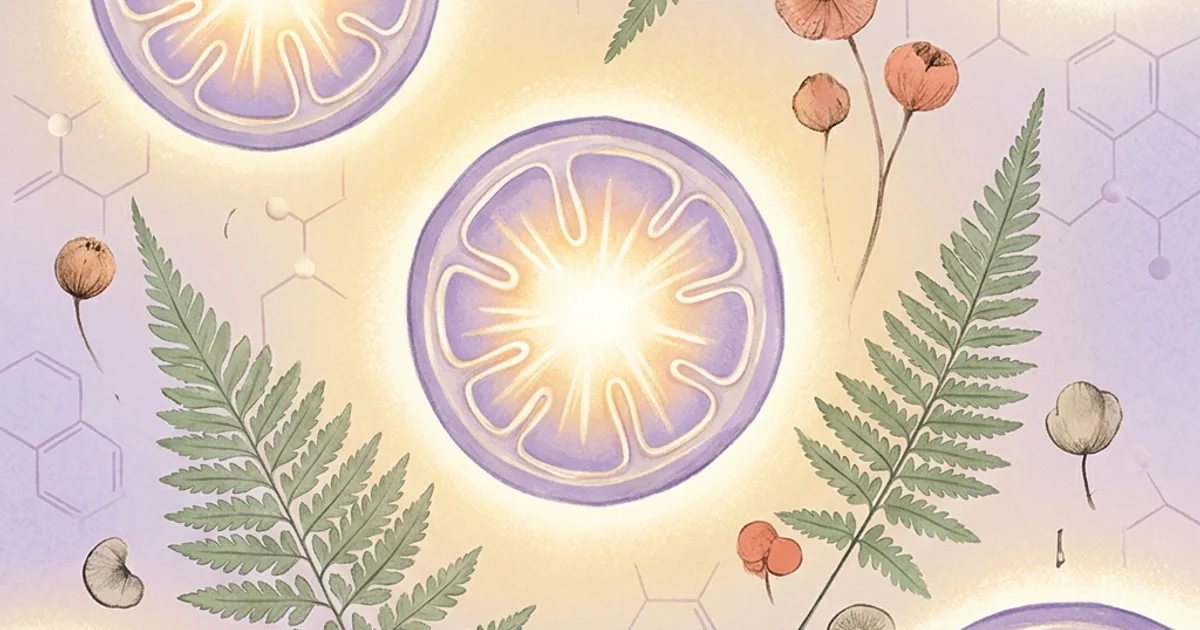
Coenzyme Q10 (CoQ10) is a fat-soluble molecule produced naturally by the body and present in every cell that needs energy. It plays two simultaneous roles: it acts in the mitochondrial electron transport chain (where ATP — cellular energy — is produced) and functions as an antioxidant, neutralizing free radicals that damage cellular structures. Eggs are cells with extremely high energy demands: they need fully functioning mitochondria to complete meiosis, withstand fertilization, and develop into viable embryos. A 2025 review published in Frontiers in Cell and Developmental Biology confirmed that CoQ10 regulates oxidative stress, reduces reactive oxygen species (ROS), and improves mitochondrial efficiency, optimizing oocyte quality and outcomes of assisted reproductive treatments [1]. Levvi lets you log your daily energy level in cycle tracking, which can help you notice changes over months of supplementation.
Why CoQ10 production declines with age
From age 30 onward, the body starts producing less endogenous CoQ10. This decline is not coincidental: it maps directly onto the drop in oocyte quality and reproductive potential. As egg mitochondria receive less CoQ10, ATP production falls, oxidative stress rises, and chromosomal errors during cell division become more frequent. A 2023 review published in Human Fertility described that the decline in CoQ10 production with aging coincides with age-related fertility decline, and that supplementation was able to reduce high rates of chromosomal abnormalities and oocyte fragmentation [2]. This is especially relevant for women over 35 or with diminished ovarian reserve — two profiles that benefit most from supplementation, according to available studies.
What the clinical studies show
The most comprehensive meta-analysis on this topic, published in the Journal of Assisted Reproduction and Genetics (2020), analyzed 5 randomized controlled trials with 449 infertile women undergoing assisted reproduction. Results showed that oral CoQ10 supplementation significantly increased clinical pregnancy rates and the number of mature eggs retrieved compared to placebo or no treatment [3]. In another randomized controlled trial with 186 young women with diminished ovarian reserve (POSEIDON group 3), 60 days of CoQ10 pretreatment before an IVF cycle resulted in more eggs retrieved, more high-quality embryos, and better ovarian stimulation response compared to the no-pretreatment group [4]. A 2014 study using polar body biopsy also showed a trend toward reduced aneuploidy in eggs from women aged 35–43 treated with 600 mg/day of CoQ10 [5].
Ubiquinol or ubiquinone: which form to choose
CoQ10 exists in two main forms: ubiquinone (oxidized form, cheaper and more common) and ubiquinol (reduced form, biologically active). For cells to use it, the body must convert ubiquinone into ubiquinol — a conversion that becomes less efficient with age. Bioavailability studies show that ubiquinol is absorbed 3 to 4 times more efficiently than ubiquinone at equivalent doses, especially in people over 40. For women over 35, with low ovarian reserve, or using statins (which deplete CoQ10), ubiquinol tends to be the more appropriate choice. For younger women or as a first attempt, ubiquinone at higher doses (400–600 mg/day) has also shown clinical efficacy. Regardless of form, CoQ10 should be taken with a meal containing fat to maximize absorption. In Levvi, you can add the supplement with the timing of your main meal of the day.
Dosage: how much to take and for how long
Clinical studies with oocyte outcomes used doses between 200 mg and 600 mg per day of CoQ10 (ubiquinone). In the controlled trial with women with diminished ovarian reserve [4], the dose was 600 mg/day for 60 days before the IVF cycle. In the aneuploidy study with women aged 35–43 [5], 600 mg/day was also used. The rationale for starting 2–3 months before your conception attempt (or IVF cycle) is that the maturation cycle of an egg from primordial follicle to mature stage takes approximately 90 days. Supplementing before that window allows CoQ10 to be present in mitochondria throughout the entire maturation period. For women trying to conceive naturally, starting 3 months before is the most widely cited protocol in the literature. For women in assisted reproduction, 60 days of pretreatment already showed measurable benefit [4]. Consult your doctor before starting to tailor the dose to your profile.
Side effects and safety
CoQ10 has a well-established safety profile. At doses used in fertility studies (200–600 mg/day), adverse effects are uncommon and generally mild: gastrointestinal discomfort, mild nausea, or diarrhea in some people, particularly when taken on an empty stomach. Taking it with a fatty meal reduces those effects and improves absorption at the same time. No evidence of toxicity has been found at doses up to 1,200 mg/day in adults. Safety during pregnancy has not been formally established in humans — most doctors advise stopping after pregnancy is confirmed, or continuing only under supervision. A 2025 double-blind randomized trial with 44 women verified that 300 mg/day for 14 days before gynecological surgery significantly preserved AMH levels with no reported adverse effects [6]. CoQ10 may also interact with anticoagulants such as warfarin — inform your doctor about all supplements you use.
How to use it in practice: a 90-day plan
If you are trying to get pregnant and want to incorporate CoQ10 into your routine, the 90-day window before your active conception attempt is the most evidence-backed starting point. This means counting 3 months back from your target fertile window and beginning supplementation on that date. Use Levvi's cycle calendar to identify when your next periods are predicted and plan that start date with enough lead time. Add CoQ10 as a medication in the app with the timing of your main meal — the gentle alarm prevents missed days, which matters because consistency is more important than any single dose. The most studied protocol is 600 mg/day of ubiquinone, split into 2 doses of 300 mg with food; those choosing ubiquinol can achieve equivalent effect with 200–300 mg/day due to higher bioavailability. Remember: CoQ10 does not replace folic acid, which is mandatory before and during pregnancy — both can be used in parallel.
Is CoQ10 right for me? Who benefits most
The literature points to groups that benefit most from CoQ10 supplementation: women over 35 (natural decline in endogenous CoQ10), women with diminished ovarian reserve (low AMH or reduced antral follicle count), poor responders in previous IVF cycles, and women with endometriosis. A study on in vitro maturation showed that CoQ10 corrected impaired oocyte maturation in eggs exposed to the follicular fluid of endometriosis patients [7]. Younger women with good ovarian reserve trying to conceive naturally may also benefit, though the most robust evidence lies in higher-risk groups. CoQ10 is not a guarantee of pregnancy — it is a mitochondrial support strategy with solid scientific backing. The decision should always involve a gynecologist or reproductive medicine specialist, who can assess your individual context and recommend the most appropriate approach.
Conclusion
Of all the supplements investigated for egg quality, CoQ10 brings together the largest body of evidence — from animal models to randomized clinical trials in real women. Its mechanism is clear: it protects egg mitochondria from oxidative stress, improves energy production, and reduces chromosomal errors during meiosis. The 90-day window before the conception attempt, at doses between 200 and 600 mg/day depending on the form chosen, is the protocol best supported by available data. Discussing CoQ10 with your doctor as part of your preconception plan is an informed step backed by science. The TTC journey involves many variables beyond your control, but caring for your eggs' mitochondria is something concrete you can do right now.