
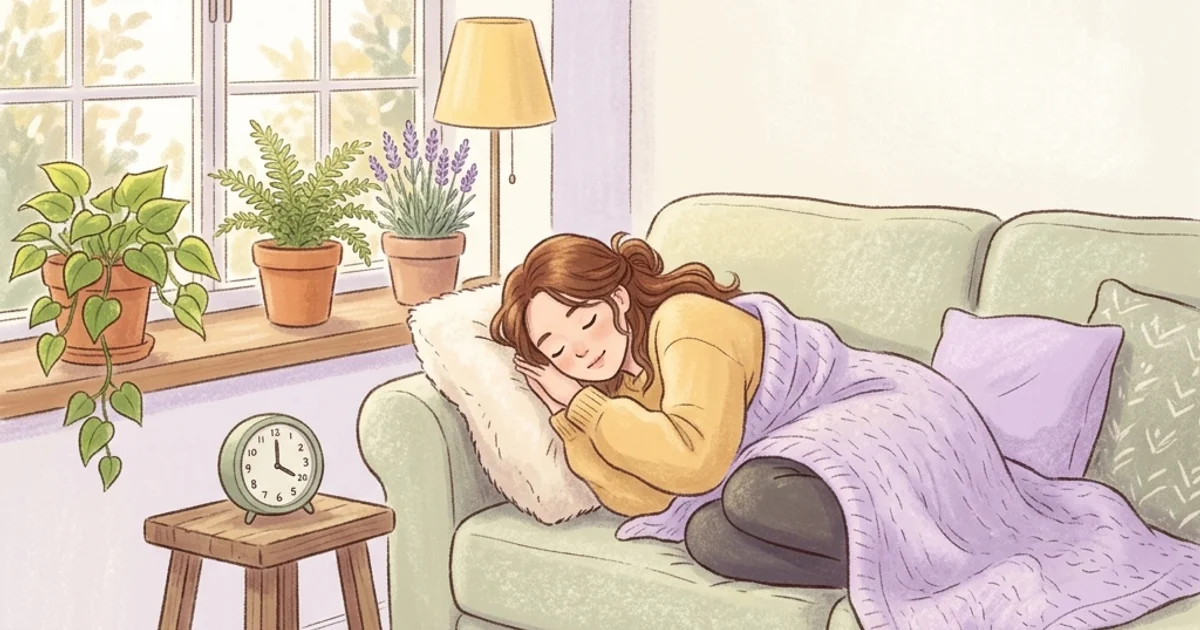
Napping divides opinions: for some it is essential, for others it signals laziness. But science has clear answers about when, how long, and how napping delivers real benefits for your health and cognitive performance. A meta-analysis of 381 participants showed that short naps significantly improve alertness. If you use Levvi to track your sleep and energy, understanding nap limits is practical, valuable information.
What happens in your brain during a nap
A nap is a restorative strategy that counters sleep deprivation and the natural alertness dip after lunch. During a short nap of 10 to 30 minutes, your brain enters light sleep stages (N1 and N2) — enough to reduce sleepiness and sharpen attention without reaching deep sleep. A 2025 narrative review explains that this effect follows the circadian rhythm, with the greatest benefit between 1 pm and 3 pm.[1]
When a nap exceeds 60 minutes, the brain can enter deep sleep (N3). Waking from that stage causes sleep inertia — the groggy, disoriented feeling that can last 15 to 30 minutes. Levvi lets you log sleep quality in the Health Hub, helping you understand whether naps are improving or undermining your overall rest.
Short naps boost alertness and memory: what the research says
A 2021 meta-analysis pooled 11 studies with 381 participants and found that daytime naps improve overall cognitive performance, with alertness showing the strongest gain — a 29% effect size improvement. The average nap duration across studies was 55 minutes, but the authors note that shorter naps (20 to 30 minutes) tend to deliver benefits without the cost of inertia.[2]
A classic 2003 review in Sleep Medicine Reviews showed that naps under 30 minutes effectively combat sleepiness in shift workers, and that multiple short naps help patients with narcolepsy manage their days. Levvi's energy check-in can signal when your body is asking for a restorative pause during the day.[3]
The ideal nap length: why 20 minutes is the sweet spot
Science points to a clear consensus: 10 to 30 minutes is the ideal nap window. Within that range, the brain benefits from light sleep stages without meaningful risk of inertia. A 2021 systematic review of 37 studies in athletes confirmed that naps in this range improve physical performance, reaction time, and perceptual measures like fatigue and sleepiness.[4]
The ideal gap between waking up in the morning and napping is 5 to 6 hours, according to the review by Yu et al. (2025). That means if you wake at 7 am, your best nap window is between 12 pm and 1 pm. In Levvi, setting your sleep schedule and using the energy modes helps align restorative breaks with your body's natural rhythm.
When napping does more harm than good
Long or poorly timed naps can disrupt nighttime sleep and create a deprivation cycle. Napping after 4 pm reduces accumulated sleep pressure and can make it harder to fall asleep at night. Epidemiological studies cited by Takahashi (2003) suggest that short, regular naps protect against cardiovascular and cognitive dysfunction, but excessive napping may signal insufficient nighttime sleep.[3]
For people with insomnia, daytime napping is generally not recommended because it reduces the drive for nighttime sleep. The key is to use napping as a complement, not a replacement, for quality sleep at night. Levvi's sleep tracking in the Health Hub helps you notice whether naps are balancing or disrupting your overall rest pattern.
Conclusion
Napping is a powerful recovery tool when used with intention. Science is clear: 10 to 30 minutes between 1 pm and 3 pm offers the greatest benefit with the lowest risk. Longer or later naps can backfire. Using Levvi to monitor your energy, sleep, and daily routine helps you find the right balance between daytime rest and quality nighttime sleep.