
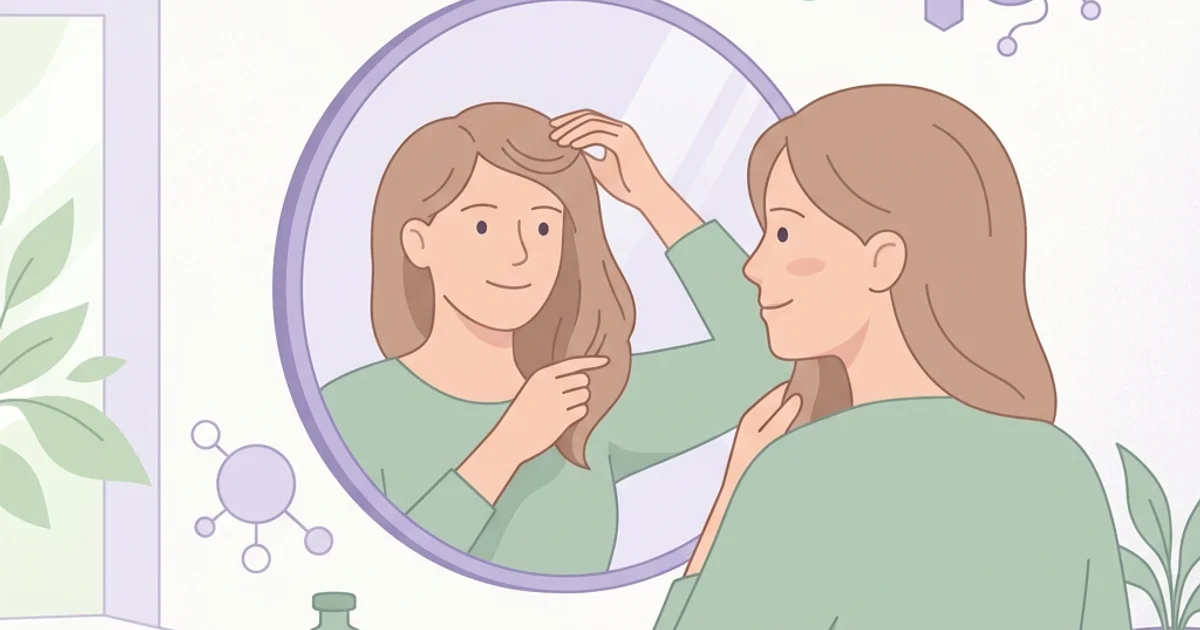
Hair loss in women is more common than it appears and has causes ranging from nutritional deficiencies to hormonal imbalances. More than 50% of post-menopausal women and up to 40% of women of reproductive age experience some degree of hair thinning. Understanding the causes is essential to know when investigation is warranted and when shedding will resolve on its own. Science offers clear pathways to diagnosis and treatment.
Telogen effluvium: the most common and reversible hair loss
Telogen effluvium is the most frequent cause of diffuse hair shedding in women, and is generally reversible when the underlying cause is treated. In this condition, an abnormal number of hairs prematurely enter the telogen (resting) phase and shed 2 to 3 months after the triggering event. A retrospective review by Karakoyun et al. (2025) of 2,851 patients found the most common causes include emotional stress, iron deficiency (low ferritin), thyroid disorders, and vitamin B12 deficiency.4 Postpartum shedding, surgery, restrictive diets, and infections are also recognized triggers. In Levvi, the task module helps you organize the lab tests needed for investigation, such as a complete blood count, ferritin, and TSH.
The role of iron and micronutrients in hair loss
Iron deficiency is one of the most common and treatable causes of hair loss in women, especially those with heavy menstrual bleeding. Studies show that women with telogen effluvium have significantly lower serum ferritin levels than the healthy population, with a mean of 18.9 ng/mL versus 60.5 ng/mL in the control group.4 Experts recommend keeping ferritin above 70 ng/mL for optimal hair growth. Beyond iron, deficiencies in vitamin B12, folic acid, and vitamin D also contribute to shedding.3 Levvi helps manage supplementation with the medication module, which lets you set alarms for each prescribed supplement and track daily adherence. The menstrual cycle log also helps identify patterns of heavy flow that may contribute to iron depletion.
Female androgenetic alopecia
Female androgenetic alopecia (FPHL) is the leading cause of progressive, chronic hair loss in women, with incidence increasing after menopause. Ramos and Miot (2015) explain that the condition results from the progressive miniaturization of hair follicles, producing increasingly finer and shorter strands.5 Unlike men, women rarely lose hair at the frontal hairline — thinning tends to be diffuse across the crown. Only one-third of women with FPHL show abnormal androgen levels; genetic and environmental factors play an important role. Associated conditions include PCOS, hyperprolactinemia, and insulin resistance. Bertoli et al. (2020) note that androgenetic alopecia can serve as a marker of cardiovascular and metabolic risk.1 In Levvi, the Health Hub lets you monitor health metrics that may be related to the condition.
When to see a dermatologist
Knowing when hair loss needs medical investigation prevents both unnecessary anxiety and delayed diagnosis. Dakkak et al. (2024) recommend seeking dermatological evaluation when shedding persists for more than 6 months, when visible thinning appears on the crown, or when hair loss is accompanied by other symptoms such as fatigue, weight gain, or menstrual irregularity.2 Basic lab workup includes a complete blood count, ferritin, TSH, vitamin B12, and — when indicated — a hormonal profile (testosterone, DHEA-S). Leavitt et al. (2025) add that inflammation, oxidative stress, and nutritional deficiencies should be evaluated together.3 Levvi makes it easy to organize these appointments and tests with recurring tasks and automatic reminders.
Treatments with scientific evidence
Treating female hair loss depends on the cause and may include supplementation, topical medications, and complementary interventions backed by evidence. For telogen effluvium, correcting the underlying deficiency (iron, vitamin B12, thyroid) generally resolves shedding within 3 to 6 months. For androgenetic alopecia, topical minoxidil (2% or 5%) is the only FDA-approved treatment for women, with peak efficacy after 1 year of use.1 Leavitt et al. (2025) reviewed promising non-pharmacological interventions including pumpkin seed oil, horsetail extract, and curcumin, which showed results in preliminary studies.3 Levvi supports treatment adherence with medication alarms and the Virtual Garden, which rewards daily consistency in health care.
Conclusion
Female hair loss deserves investigation, not resignation. In most cases, the cause is identifiable and treatable — from iron deficiency to hormonal changes. The first step is observing whether the shedding is recent and intense (likely telogen effluvium) or gradual and progressive (possible androgenetic alopecia). In both cases, lab tests and dermatological evaluation guide the most appropriate treatment.